Why Arizona Offices Choose Solar Window Film Over Blinds
How commercial solar tint keeps daylight, cuts glare on screens, and lowers heat along west-facing glass — without closing Phoenix and Scottsdale offices off with blinds.
Topics: solar window film vs blinds · commercial solar tint Arizona · office glare reduction Phoenix · west facing window film · spectrally selective window film · blinds vs window tint office · Phoenix commercial window tint · Scottsdale office solar film
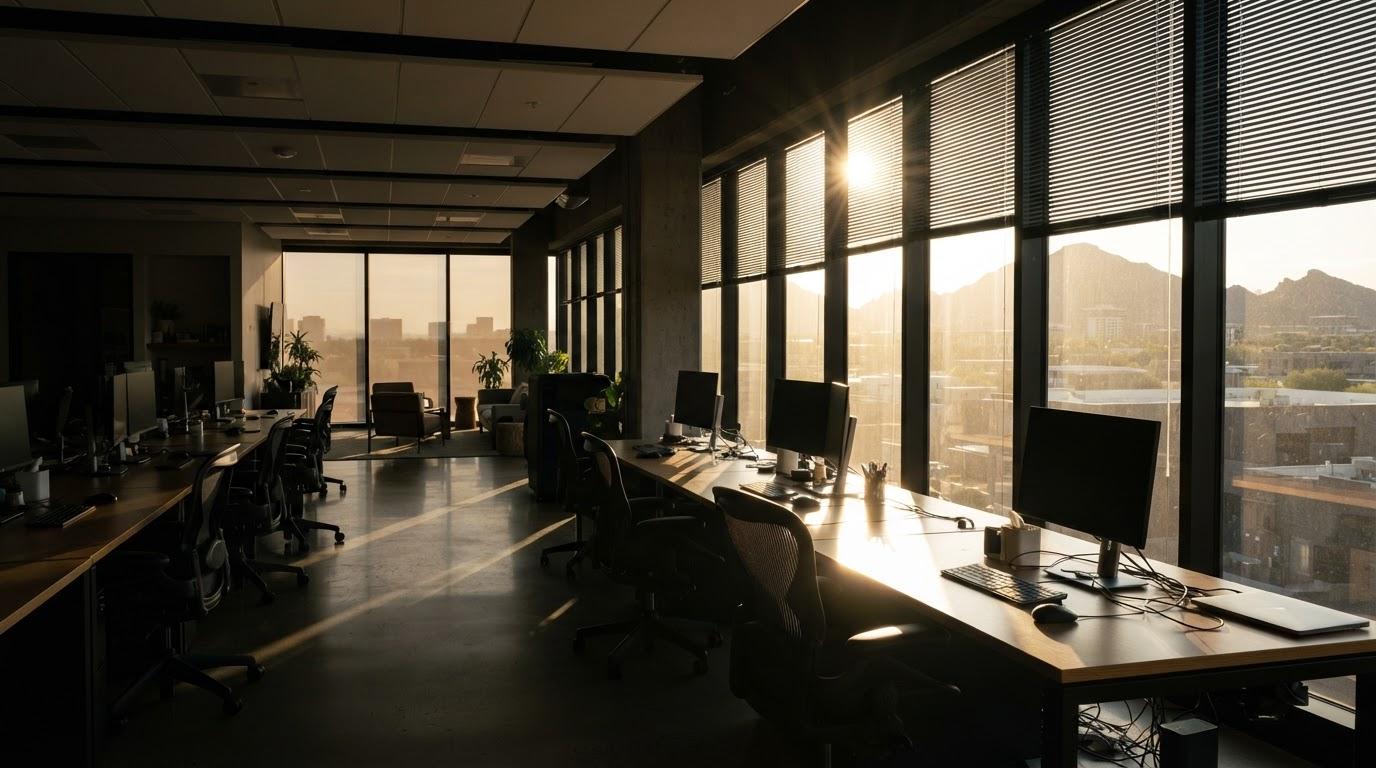
In Phoenix and Scottsdale offices, the afternoon sun does not politely fade. West glass turns into a glare machine, monitors wash out, and someone lowers every blind on the elevation. Daylight disappears. The HVAC still fights hot perimeter zones. And the suite that was sold as “bright and open” starts to feel like a cave by 2 p.m.
That is why more Arizona property managers, facilities teams, and tenant-improvement contractors are specifying solar window film instead of blinds on commercial glass. Commercial solar film cuts glare and heat at the glass line while keeping usable daylight — without the maintenance, stacking, and closed-off look of horizontal blinds or roller shades.
1. Why blinds fail on Arizona west glass
Blinds are familiar — and they create a predictable set of complaints on Valley commercial projects:
- They kill daylight when you need them most. The hours with the worst glare are also the hours when closed blinds make the suite feel dark and leased square footage feel smaller.
- Heat still loads the glass. Closed blinds stop some radiant comfort issues at the desk, but solar heat gain still hits the facade and raises perimeter HVAC demand.
- Maintenance never ends. Broken slats, uneven drops, dust, and “half the floor closed / half open” sightlines age the whole elevation.
- They fight the architecture. Curtain-wall offices in Phoenix and Tempe are marketed on glass and views — blinds erase that value.
2. What solar window film does better
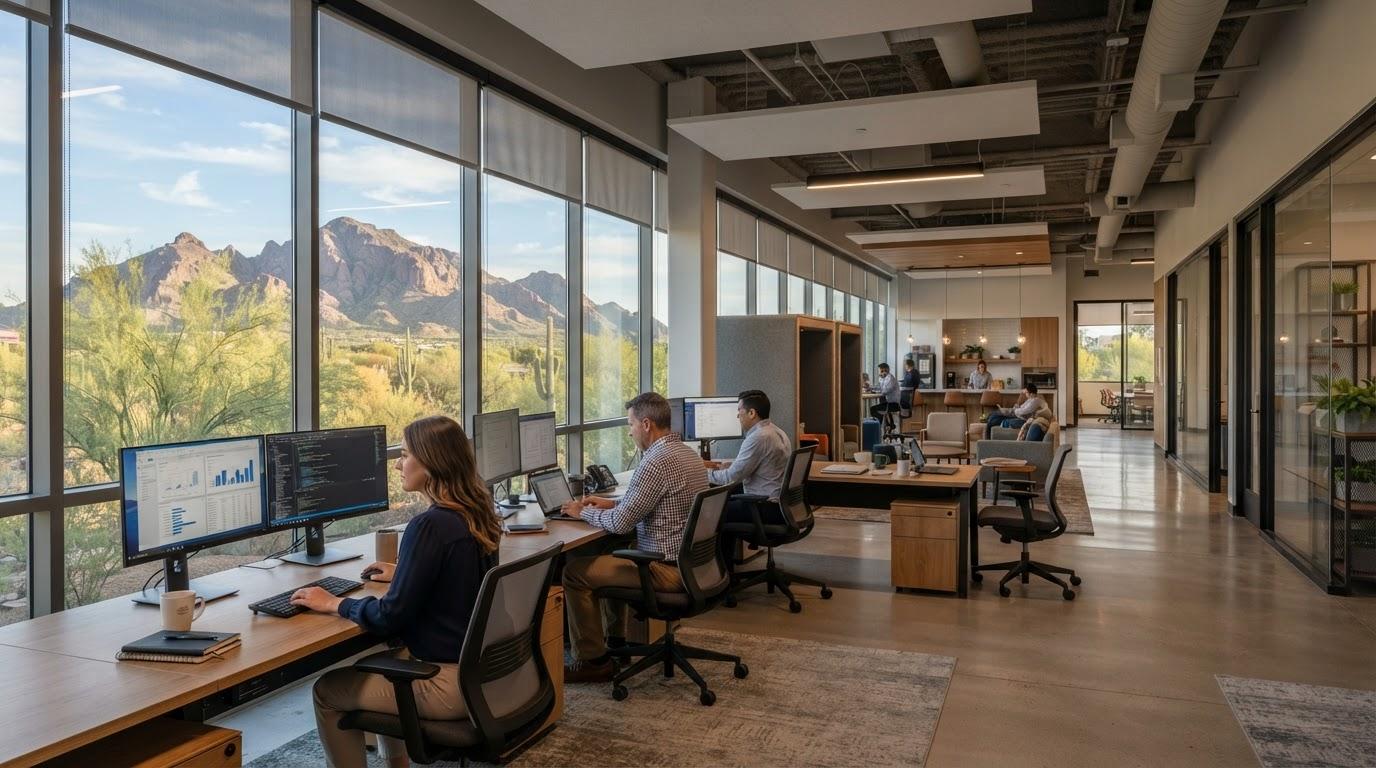
Commercial solar window film (especially spectrally selective film) rejects a large share of infrared heat and cuts glare while transmitting more visible light than old dyed “limo tint.” On Arizona offices, that usually means:
- Monitors stay readable near the glass without permanent shade packs
- Perimeter desks become usable again — higher effective seat count
- Less “blinds closed all afternoon” culture on west and south elevations
- Cleaner facade lines for brand standards and landlord VLT rules
- Lower disruption than glass replacement or full shade-system redesigns
- Glare reduction
- Up to ~87%
- UV rejection
- Up to 99%
- Daylight
- Kept, not blocked
3. Solar film vs blinds — side-by-side
Use this comparison when GCs or owners ask for a one-pager:
- Primary job: Blinds = block light. Solar film = cut heat/glare at the glass.
- Views & daylight: Blinds close them off. Film preserves both within the chosen VLT.
- Aesthetics: Blinds add visual clutter. Film is nearly invisible when specified correctly.
- Maintenance: Blinds need ongoing service. Film is wipe-clean with proper care during cure and after.
- Install disruption: Film is typically days, not a multi-week shade package across a floorplate.
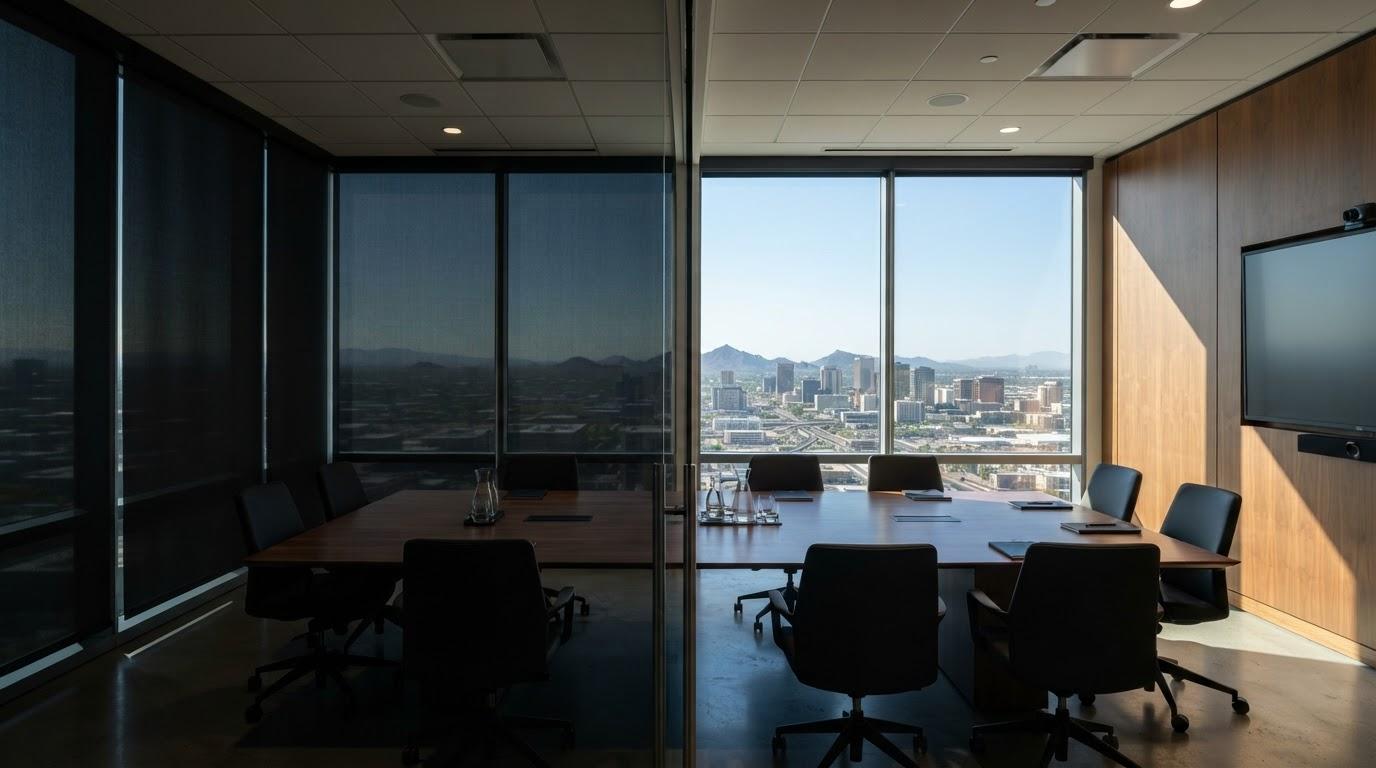
- Best pairing: Some rooms still want shades for blackout (training rooms, boardrooms). Most open offices do not.
Have a west-glass glare problem?
Send orientation photos and suite type — we’ll recommend a solar film VLT range vs. keeping blinds.
4. When blinds (or shades) still make sense
FilmTeq does not pretend solar film replaces every shade. Keep or add shades when you need:
- True blackout for projection, sleep rooms, or media
- Neighboring building reflection that still needs adjustable occlusion
- Tenant preference for layered privacy after hours
For day-to-day office glare reduction in Phoenix, film first is usually the higher-ROI move — then add shades only where blackout is a hard requirement.
5. How to spec solar film so it beats blinds
- Map N/S/E/W elevations and peak glare hours
- Confirm glass type (single, dual, low-E) for film compatibility
- Choose spectrally selective film over “darkest tint wins”
- Match landlord / brand VLT rules before ordering
- Plan after-hours install for occupied open offices
6. FAQ — solar film vs blinds
Common questions from Arizona facilities directors and GCs comparing solar window film to blinds:
Is solar window film better than blinds for Arizona offices?
For day-to-day glare and heat on west-facing commercial glass, yes — spectrally selective solar window film usually outperforms blinds because it keeps daylight and views while cutting infrared heat and monitor washout. Blinds still win for true blackout rooms. Most Phoenix open offices need film first, then shades only where projection or sleep rooms require total occlusion.
Will commercial window tint make our office look dark?
Not if Visible Light Transmission is chosen carefully. Modern solar films for Arizona offices are designed to reject heat and glare without the cave effect of closed blinds. FilmTeq matches VLT to landlord and brand standards so storefronts and curtain walls stay bright enough for leasing tours and daily work.
Can we keep some blinds after installing solar film?
Yes. Many Scottsdale and Tempe projects keep roller shades in boardrooms or training rooms while removing or retiring blinds on open-office elevations. Solar film handles the all-day glare problem; shades become an occasional tool instead of a permanent closed wall of fabric or slats.
How long does solar film installation take in an occupied suite?
Most suite-level commercial tint projects finish in one to three days, and FilmTeq can schedule after-hours crews so tenants stay productive. Multi-floor curtain walls are phased by elevation. Cure guidance is shared with facilities so cleaning crews do not damage fresh film.
Does solar film help HVAC costs compared with closing blinds?
Closed blinds reduce some comfort complaints at the desk but still allow solar heat to load the glass and drive perimeter cooling. Commercial solar film rejects a portion of that heat at the glass line, which often improves perimeter comfort and reduces the need to overcool the core — a frequent ROI talking point for Arizona facilities teams.
Spec-ready takeaway
If west glass is driving closed blinds, hot desks, and glare tickets, specify commercial solar window film before another shade package. FilmTeq Commercial Films surveys Phoenix- metro offices, matches VLT to your standards, and installs with after-hours crews when suites stay occupied — with first-order savings of up to $1,000.
Ready to ditch the afternoon blinds?
Tell us about your west glass — we’ll recommend a solar film approach for your Phoenix-metro suite.